Let’s be blunt.
Most sales copy dies in the first few sentences — not because the offer’s bad…
…but because the prospect doesn’t feel the pain yet.
You’ve probably seen it: copy that jumps straight into “features” and “benefits” like a cheerleader on espresso.
But here’s the thing — nobody cares about your solution until they feel the problem in their gut.
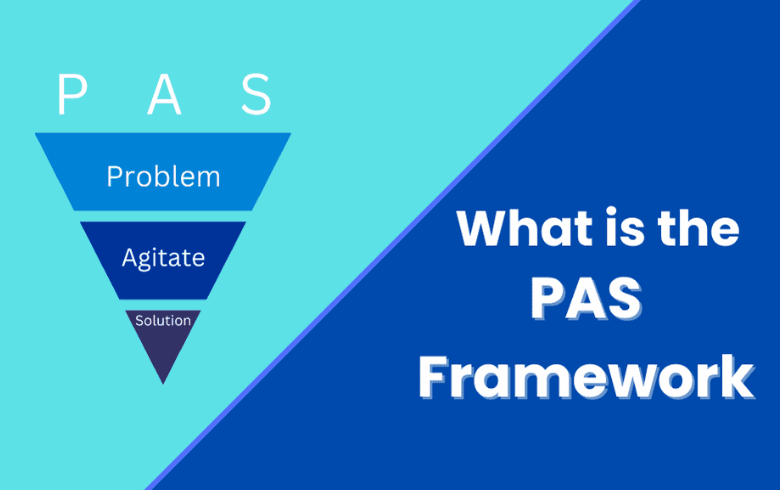
That’s where P.A.S. comes in.
Problem. Agitate. Solution.
It’s one of the oldest, simplest, and most profitable frameworks in copywriting history.
And when you use it right, it turns lukewarm readers into hand-raisers who say, “Where do I buy?”
Let’s break it down — Makepeace style.
Step 1: Problem — Tap the Nerve
Before you sell anything, you’ve got to show your reader you get them.
That means painting the pain in full color.
Forget “You’re busy” or “You want to make more money.”
That’s surface-level fluff.
Instead, dig deeper. Ask:
What’s the real cost of their problem?
What does it feel like at 2 a.m. when the worry won’t stop?
What are they secretly ashamed or frustrated about?
Clayton used to say: “Your reader has to see themselves in your copy — like you’ve been reading their mail.”
Example:
“You’re staring at your sales dashboard again.
Numbers flat. Ads bleeding cash. You tell yourself it’ll pick up next week… but you’ve been saying that for months.”
Now the reader’s hooked. They’re nodding. You’ve entered their world.
Step 2: Agitate — Pour a Little Salt on the Wound
This is where most copywriters chicken out.
They think it’s “too negative.” But agitation isn’t cruelty — it’s clarity.
You’re helping the reader confront the true weight of staying stuck.
Show them what happens if they don’t fix it.
The stress.
The wasted time.
The opportunity slipping away.
The future self who says, “I wish I’d done something sooner.”
Example:
“You keep pouring money into ads that don’t convert — hoping one tweak will fix it. But deep down, you know it’s not the ads. It’s the message. And every day you wait, competitors steal your market share.”
Now the reader’s not just aware of the problem — they’re emotionally ready to solve it.
Step 3: Solution — Hand Them the Lifeline
Once you’ve stirred up that emotion, then you introduce the fix.
And here’s the key: make the transition feel like relief.
Example:
“That’s where my P.A.S.-driven copy process comes in.
I start by uncovering your customer’s core pain, turn it into an irresistible hook, and build every word around solving that pain — so prospects can’t help but say yes.”
Notice the shift?
You’re not selling features — you’re selling freedom from pain.
That’s the emotional payoff every buyer craves.
Bonus Tip: Stack P.A.S. Like Lego Bricks
The magic of P.A.S. isn’t limited to your headline or lead — it can drive entire campaigns.
Use it in emails: each one a mini problem-agitate-solution story.
Use it in ads: short bursts of emotion leading to your offer.
Use it in videos: let your tone amplify the agitation and relief.
Every time you restate the problem and present the solution, you build emotional momentum — and that’s what moves money.
Bottom Line
P.A.S. isn’t “copywriting theory.”
It’s human psychology distilled into three unstoppable steps.
Problem: make them feel it.
Agitate: make them want relief.
Solution: give them hope (and your offer).
Master this — and you’ll never stare at a blank page again wondering, “Where do I start?”
You’ll know exactly how to lead your reader from pain to purchase.
Want copy that hits like this?
Let’s talk. I’ll help you turn your offer into a P.A.S.-powered sales machine that converts curiosity into customers — fast.
Message me now to discuss your copywriting project asap!