Alright, let’s talk about AIDA. Not the opera, though that’s a classic too. I’m talking about the copywriting framework that’s been around longer than your grandpa’s favorite armchair, and it’s still kicking ass.
You see, most people think they’re “writing” when they’re putting words on a page. But you and I both know, it’s not about writing. It’s about selling. It’s about getting inside your prospect’s head, figuring out what makes ’em tick, and then giving ’em exactly what they need, delivered on a silver platter with a bow on top.
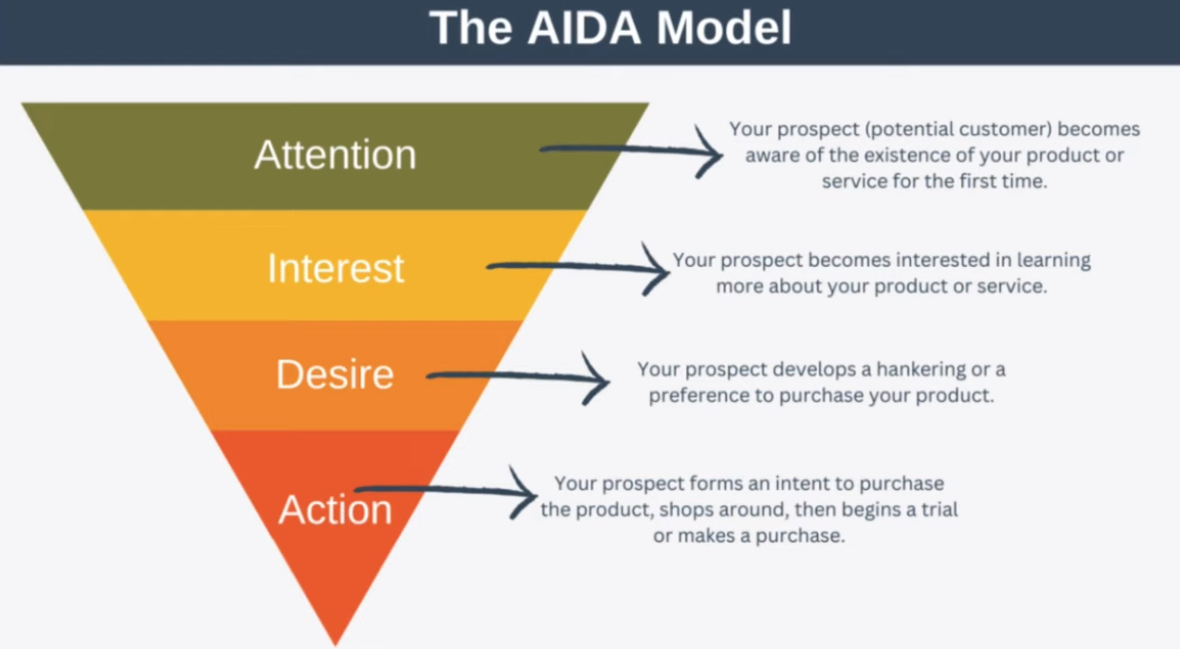
And that, my friend, is where AIDA comes in. It’s not some magic bullet, but it’s a damn good roadmap. It’s a simple, four-step process that mirrors how a human being makes a decision to buy something. Think of it like a dance, and you’re leading.
A – Attention: Stop the Scroll, Soldier!
First things first, you gotta grab ’em by the eyeballs. In today’s noisy world, that’s harder than wrestling a greased pig. You’ve got about three seconds, maybe less, before they’re off to the next shiny object.
So, how do you do it?
Headlines, baby, headlines! This isn’t where you explain everything. This is where you punch them in the gut with a benefit, a question, or a shocking statement. Something that makes them say, “Hold on a minute, what’s that about?”
Intrigue, not information. Don’t dump your entire product spec sheet in the first paragraph. Tease ’em. Make ’em curious. What’s the biggest problem your prospect is facing? Hit ’em with it, right out of the gate.
Think about it: you’re scrolling through Facebook, seeing pictures of cats and what your Aunt Mildred had for lunch. Then, BAM! A headline that promises to solve your biggest headache. You stop. You look. That’s attention.
I – Interest: Now You’ve Got ‘Em, Keep ‘Em Hooked!
Okay, so you’ve got their attention. Don’t blow it! This is where you start to build a case, to make them care. This isn’t about bragging about your product; it’s about connecting with their desires and their pain.
Agitate the problem. You know their problem, right? Dig into it. Make it feel real. Make them nod their head, thinking, “Yeah, that’s exactly how I feel!”
Introduce your solution as the hero. Once you’ve twisted the knife a little, present your product or service as the logical, obvious answer to all their woes. But again, focus on the benefits, not just the features. What will it do for them? How will it make their life better?
This is where you paint a picture. You’re showing them the path from their current crappy situation to their desired glorious future, and your product is the golden bridge.
D – Desire: Make ‘Em Salivate!
This is where you turn interest into a burning, undeniable craving. You’ve got them nodding, you’ve got them understanding, now you need them to want it. Like a kid staring at a candy store window.
Proof, proof, and more proof. Don’t just tell ’em it works; show ’em. Testimonials, case studies, statistics, guarantees. Remove every ounce of doubt.
Create urgency and scarcity (ethically, of course!). Why do they need it now? What will they lose if they wait? Is there a limited supply? A special bonus that expires? This isn’t about manipulation; it’s about giving them a compelling reason to act.
Paint vivid pictures of the future. What will their life look like once they have your solution? More money? Less stress? More free time? Make it so real they can almost taste it.
You’re not just selling a product; you’re selling a transformation. You’re selling the feeling they’ll get when their problem is solved.
A – Action: Tell ‘Em What to Do, Dammit!
You’ve done all the heavy lifting. You’ve got their attention, piqued their interest, and stoked their desire. Now, for the love of all that is holy, tell them exactly what you want them to do! Don’t make ’em guess.
Clear, concise call to action. “Click here,” “Buy now,” “Sign up today.” No ambiguity.
Remove all friction. Make it as easy as humanly possible for them to take the next step. If it’s a form, make it short. If it’s a button, make it big and obvious.
Reiterate the benefit. Just before they take action, remind them one last time what they’re getting and why it’s so valuable.
This is not the time to be shy. You’ve led them all this way; now guide them across the finish line.
The Bottom Line
AIDA isn’t a formula you just blindly fill in. It’s a way of thinking. It’s about understanding the psychology of selling and building a persuasive argument piece by piece.
So, the next time you sit down to “write” something that’s supposed to sell, don’t just vomit words onto the page. Think AIDA. Think about the human on the other side. And then, go out there and make some money.
If you need help with implementing AIDA into your next copywriting job, then contact me!